Spoon theory and ADHD: how to manage your energy
Spoon theory explains why your energy isn't unlimited. A simple tool to pace your days when you have ADHD.

Some days you do everything effortlessly. Others, answering a single email feels impossible. If that rings true, spoon theory can help you put words, and a bit of strategy, around your ADHD energy.
Spoon theory in two minutes
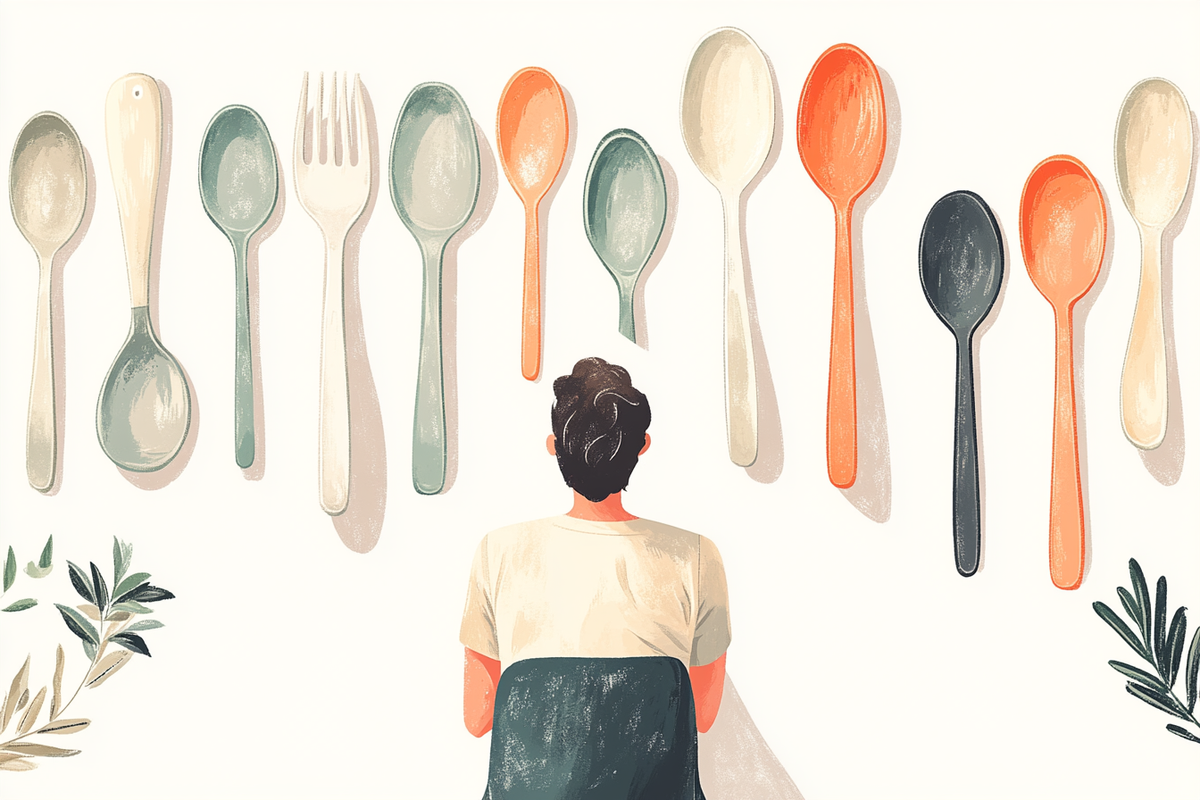
Coined by Christine Miserandino to talk about chronic illness, this metaphor has become a reference point for many neurodivergent people. The idea: each morning you start with a limited number of "spoons" representing your available energy. Every action spends one or more. When the spoons are gone, they're gone. You can't "push through" indefinitely without paying for it later.
Why it's especially true with ADHD
With ADHD, many actions that feel "free" to others cost you a spoon: starting a task, resisting distractions, masking in a meeting, tracking time. You spend energy on invisible things. Hence the sense of working twice as hard for the same result, and a tiredness that doesn't match what you "actually" did all day.
Using spoons as a tool, not an excuse
- Estimate today's reserve. On waking, ask: do I have a lot, some, or few spoons today? Match the plan to the real reserve, not the ideal one.
- Spot your big spenders. Transitions, noise, surprises and prolonged socializing are expensive. Plan around them.
- Protect a few spoons. Don't plan your day at 100%. Keep a margin, or the smallest hiccup pushes you into the red.
- Recharge for real. Sleep, movement, true screen-free breaks. "Rest" scrolling recharges badly: it often spends more spoons than it returns.
The real benefit: less guilt
Spoon theory doesn't let you off the hook, it helps you pace yourself. Understanding that your energy is a limited, fluctuating resource means you stop judging yourself as if it were infinite. You plan around reality, and protect your low-spoon days instead of digging deeper.
Get the next one by email
One practical idea at a time, no spam, no fluff. Subscribe to the ADHD Corner newsletter.